



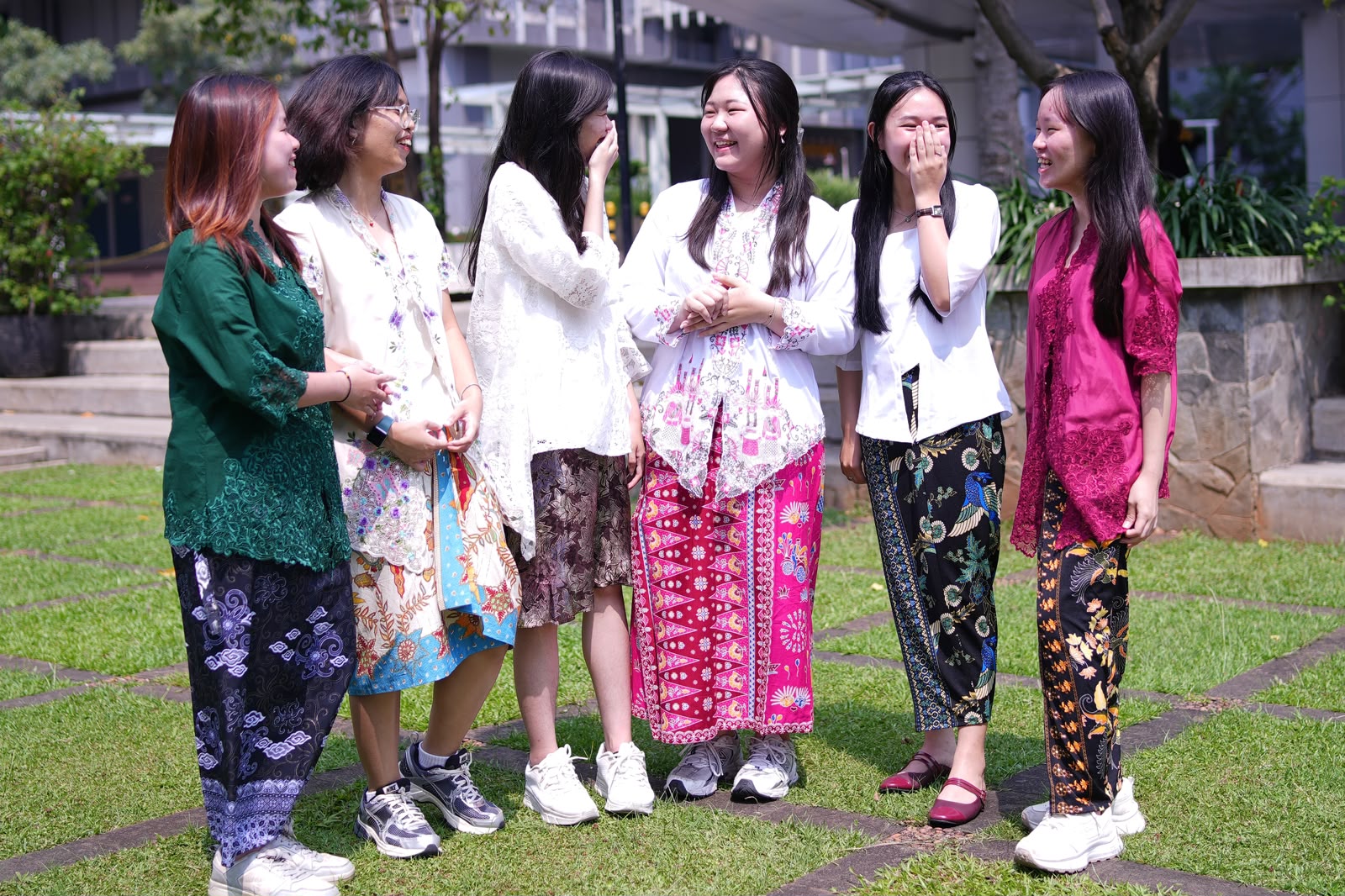
Source: Untar Public Relations
Every 24 July, Indonesia commemorates National Kebaya Day as an occasion to celebrate and preserve the kebaya as one of the nation’s cultural identities. The observance serves as a reminder that the kebaya is not merely a relic of the past, but a living cultural heritage that continues to evolve with the times. Amid ever-changing fashion trends, the kebaya demonstrates that tradition and modern style can coexist harmoniously.
The kebaya is more than traditional attire—it is an integral part of the cultural identity of Indonesian women and has been passed down through generations for centuries. The word kebaya is believed to have originated from the Arabic word abaya, referring to an outer garment that gradually blended with the cultures of the Indonesian archipelago, giving rise to the diverse styles of kebaya known today. Historically, women from various social backgrounds wore the kebaya as everyday clothing, reflecting values of modesty, elegance, and Indonesia’s rich cultural heritage.
The Decline of Kebaya in Everyday Life
The role of the kebaya began to change in the early 20th century. As Western influences spread throughout Indonesia, European-style dresses and clothing came to symbolize modernity and education. Following Indonesia’s independence, globalization accelerated and more women entered the workforce. As a result, the kebaya gradually came to be viewed as less practical for daily activities and was increasingly replaced by clothing that offered greater simplicity and flexibility.
Indonesia’s Efforts to Preserve the Kebaya
Despite these changes, the kebaya has never lost its cultural significance. It remains a symbol of Indonesia’s national identity that deserves to be preserved and celebrated. Its recognition as a UNESCO Intangible Cultural Heritage underscores the importance of keeping cultural traditions alive by continuing to wear, introduce, and pass them on to future generations. Preserving the kebaya is not only about maintaining the garment itself, but also about honoring the history, values, and cultural journey it represents.
The Modern Evolution of the Kebaya
The growth of the fashion industry has introduced a new chapter in the evolution of the kebaya. Today, it is no longer reserved exclusively for formal or traditional occasions. Many women pair the kebaya with trousers, skirts, denim, sneakers, and contemporary accessories, creating casual yet stylish looks suitable for everyday wear. These modern combinations have made the kebaya more appealing to younger generations while preserving its elegance and cultural identity.
Freedom of Expression While Respecting Tradition
Although styling options have become increasingly diverse, it is important to recognize that modern and traditional kebaya serve different purposes. Contemporary interpretations of the kebaya are well suited for casual settings and informal activities as a form of personal fashion expression. However, for traditional ceremonies, cultural events, and formal occasions governed by customary practices, the kebaya should continue to be worn according to established traditions as a sign of respect for Indonesia’s cultural heritage.
Efforts to preserve the kebaya have also gained momentum through the emergence of various communities of young Indonesian women. These communities actively encourage people to wear the kebaya in everyday situations—from the workplace and social gatherings to community events and social media content creation. By embracing relaxed, creative, and personalized styling, they have transformed the perception of the kebaya from a formal traditional garment into a fashionable expression that remains deeply rooted in Indonesian culture.
National Kebaya Day serves as a reminder that culture continues to thrive when it evolves with the times. Wearing the kebaya—whether in its traditional form or through modern interpretations that continue to honor its cultural values—is a simple yet meaningful way to preserve Indonesia’s heritage and ensure it remains relevant, cherished, and appreciated by both present and future generations. (VC/YS)