



Source: Untar Public Relations – VC
Untar, through the Institute for Cooperation and International Relations, organized the International Conference on Applied Artificial Intelligence, Data Engineering, and Sciences (ICAIDES) 2025 on Thursday (11/12/2025) at Campus I Untar. The event carried the theme “The Implementation of Applied Artificial Intelligence, Data Engineering, and Sciences for Sustainable Development of Higher Education.”
ICAIDES 2025 was officially opened by Untar Rector, Prof. Dr. Amad Sudiro, S.H., M.H., M.Kn., M.M. The conference was coordinated by the Head of the Institute for Cooperation and International Relations, Assoc. Prof. Dr. Ir. Hugeng, S.T., M.T., SMIEEE, IPU, and featured speakers from various international institutions discussing the application of artificial intelligence (AI), data engineering, and science in supporting the development of higher education and the healthcare sector.
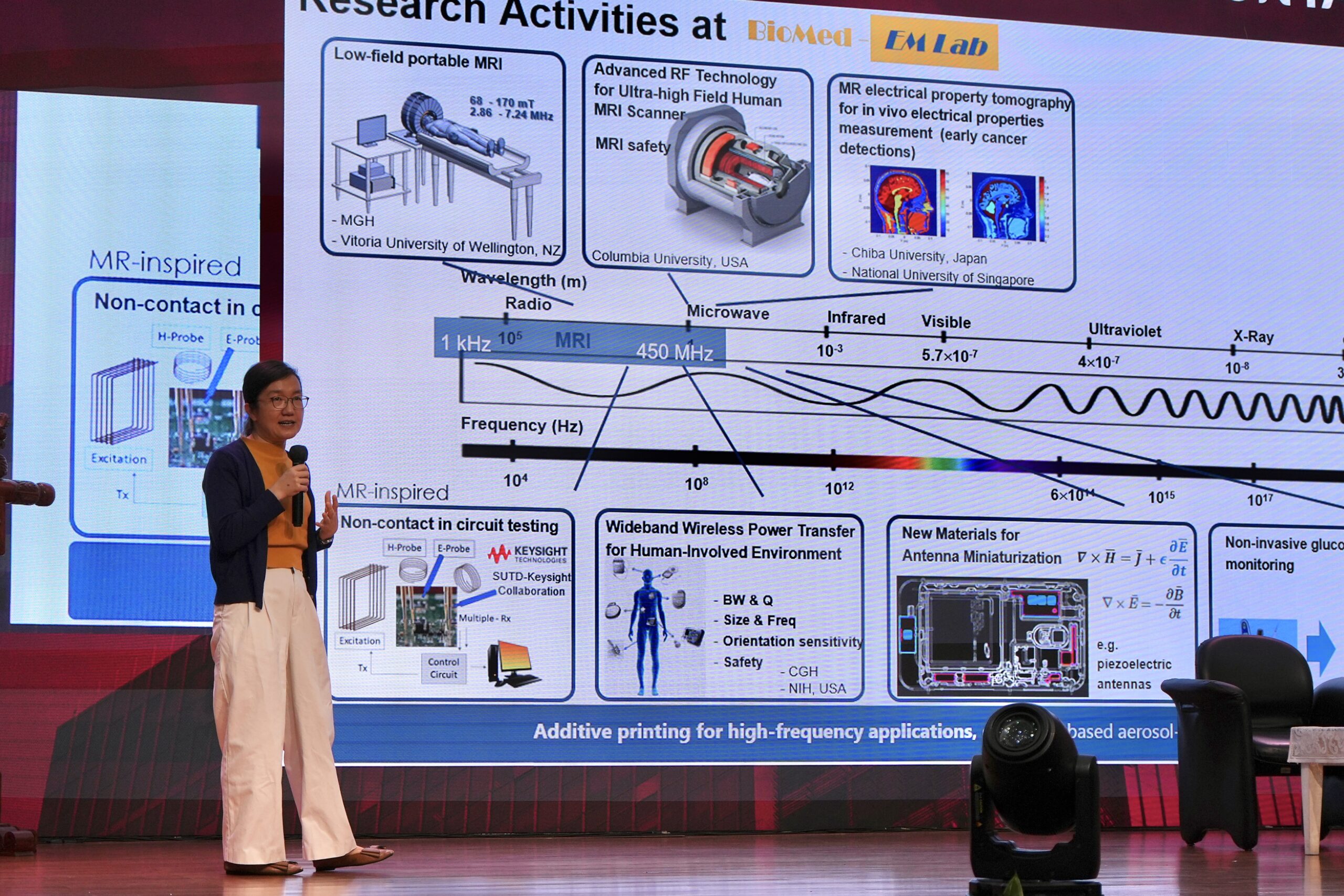
The first speaker, Shaoying Huang, Ph.D., Associate Professor in Engineering Product Development at the Singapore University of Technology and Design, presented on “Low-field Portable MRI, AI, & How They Would Change the Future Healthcare.” She explained the development of AI-based portable MRI systems, including magnet and system design optimization, image quality enhancement, imaging acceleration, as well as automated scanning planning and interpretation.
“The development of low-cost MRI technology is key to improving access to healthcare services, especially in regions with limited resources,” she said.
The second speaker, Dr. Udit Satija from the Department of Electrical Engineering, Indian Institute of Technology Patna, Bihar, discussed deep learning-based biomedical systems. He explained the role of bio-signals in understanding physiological mechanisms, supporting diagnosis, monitoring, and medical therapy.
According to him, “AI-based bio-signal analysis plays a strategic role in advancing affordable healthcare technology to support Universal Health Coverage,” followed by an advanced workshop session on AI Model Compression.
The next session featured Dr. Nur Afny Catur Andryani, S.Si., M.Sc. and Andreas Winata, M.Kom. from the BINUS Graduate Program – Computer Science Doctoral Program and BINUS HealthTech Advanced Laboratory (BINUS HeAL). They highlighted the challenges in achieving Indonesia’s SDGs, particularly SDG 3 on health and well-being, as well as the potential of computer science research in supporting affordable healthcare innovation. Dr. Nur Afny stated that “the utilization of AI and computation on resource-constrained devices is one of the important approaches to addressing healthcare challenges in Indonesia.”
ICAIDES 2025 also attracted paper presenters from various countries, including the United Kingdom, Vietnam, India, Iran, Italy, the Philippines, Kuwait, Malaysia, Hong Kong, Türkiye, Canada, Japan, China, Arab countries, Egypt, Tunisia, the United Arab Emirates, the United States, Russia, and Indonesia. Domestic participation also came from several universities, including Universitas Indonesia, Diponegoro University, Telkom University, Institut Teknologi Sepuluh Nopember, Universitas Gadjah Mada, Universitas Syiah Kuala, BINUS University, and Universitas Tarumanagara.
Through this forum, ICAIDES 2025 aims to serve as a platform for knowledge exchange and research dissemination on artificial intelligence, data engineering, and applied sciences, particularly in developing technology-oriented sustainable higher education and leveraging AI to address challenges in healthcare and resource limitations across regions. (VC/YS)