



Doc: Untar Public Relations – ER
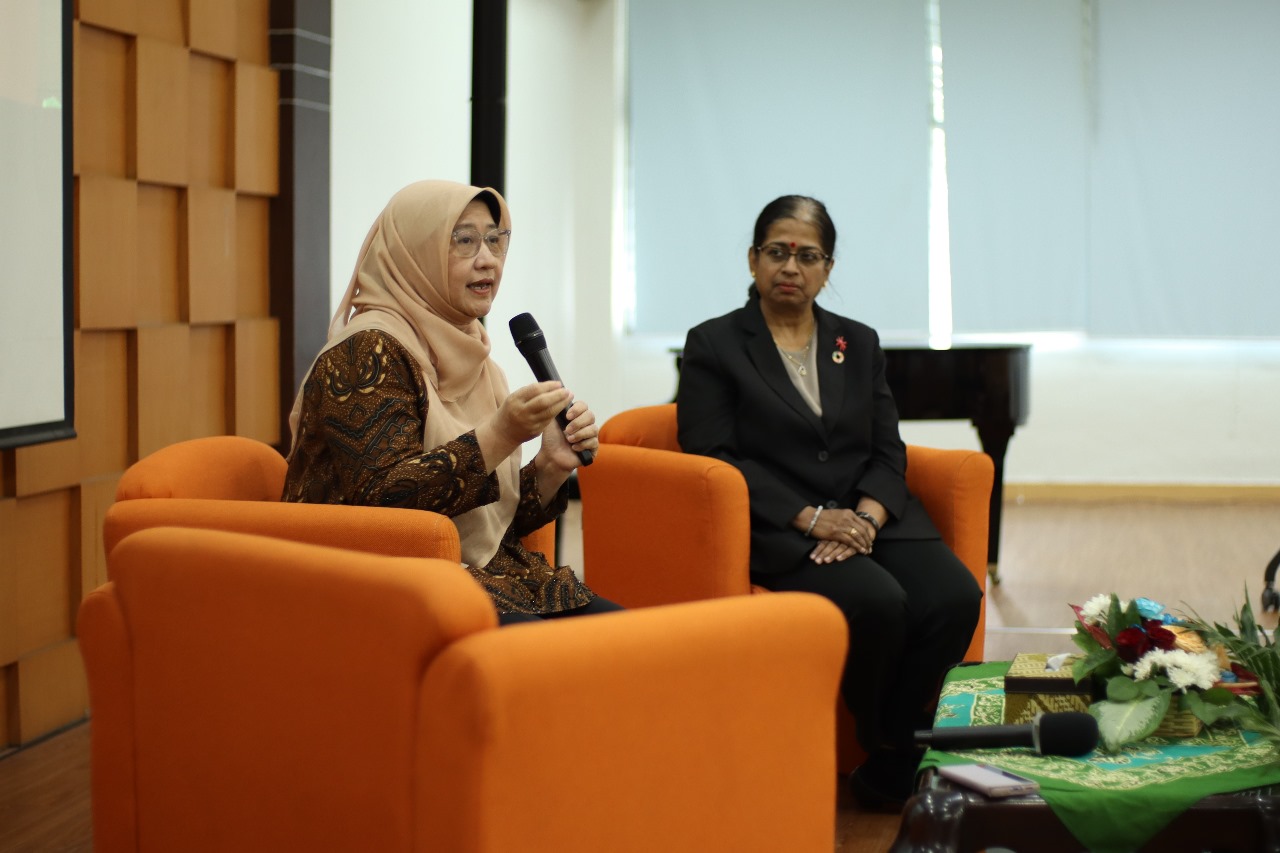
Universitas Tarumanagara (Untar), in collaboration with INTI International University, Malaysia, held an international seminar titled “Antibiotic Resistance: The Silent Pandemic” on Thursday (18/7/2024) at the Auditorium of Building J, Untar Campus I.
Chairperson of the Organizing Committee, Dr. dr. Shirly Gunawan, Sp.FK., stated that antibiotic resistance poses a serious threat to global public health. Without proper monitoring and control, antibiotic resistance could contribute to worsening health problems and become one of the leading causes of death worldwide. She noted that low public awareness regarding the consequences of inappropriate antibiotic use remains a significant challenge in improving global health, which is why antibiotic resistance is often referred to as the silent pandemic.
In his speech, the Rector of Untar Prof. Dr. Ir. Agustinus Purna Irawan, M.T., M.M., I.P.U., ASEAN Eng., expressed hope that antibiotic resistance would become a shared priority issue to address. “Doctors, policymakers, researchers, and all members of society must work together to educate the public on the responsible use of antibiotics and contribute to the discovery of new treatment methods to prevent infections,” he said.
The seminar featured speakers from various international universities and institutions, including Prof. Dr. Geetha Subramaniam (INTI International University), dr. Anis Karuniawati, Ph.D., SP.MK(K) (Antimicrobial Resistance Control Committee), Assoc. Prof. Dr. Stephen Kidd (The University of Adelaide, Australia), Lalita Ambigai Sivasamugham (INTI International University), Prof. Dr. Anshoo Agarwal (Northern Border University, Kingdom of Saudi Arabia), Assoc. Prof. Dr. Gayathri Gururajan (Vels Institute of Science, India), and dr. Velma Herwanto, Sp.PD., Ph.D., FINASIM, FACP (FK Untar).
Geetha revealed that deaths caused by antibiotic resistance are projected to reach 10 million annually by 2050, potentially rivaling cancer-related mortality. She emphasized that antibiotic resistance is not merely a healthcare issue but is also closely linked to economic conditions and poverty, illustrating how inequality can exacerbate the global health crisis.
Meanwhile, Stephen discussed bacterial responses to stress within the human body and their reactions to antibiotics. His research findings indicate that antibiotic resistance emerges through genetic changes in bacterial characteristics. He also highlighted the importance of research and innovation in developing more effective antibiotics, supporting advancements in healthcare infrastructure and industry.
Lalita presented research findings demonstrating that natural ingredients such as neem leaves, bitter melon, and lemongrass consistently exhibit antibacterial properties. Her research aligns with the principles of responsible consumption and production by focusing on environmentally friendly natural alternatives to conventional antibiotics.
She expressed confidence that further studies on extraction methods and a deeper understanding of plant compound structures could lead to the development of plant-based antibiotic alternatives suitable for large-scale production and consumption in the future.
Addressing another aspect of the issue, Anshoo explained that antibiotic resistance often arises from improper use, causing antibiotics to lose their effectiveness against bacterial infections. He further stressed that antibiotics cannot treat infections caused by viruses or fungi.
“Sufficient public knowledge about the proper function of antibiotics can reduce misuse and help minimize the potential for antibiotic resistance,” he emphasized.
As the final speaker, Velma highlighted the decline in antibiotic discoveries since the 1950s, with no major new classes discovered after 1987, while antibiotic resistance rates have continued to rise. “This underscores the urgency of using antibiotics rationally through accurate diagnosis and prescribing the appropriate dosage for patients,” she concluded.
The international seminar was also attended by Dean of the Faculty of Medicine (FK) Untar Dr. dr. Noer Saelan Tadjudin, Sp.KJ., and Dean of the Faculty of Health and Life Sciences of INTI International University, Prof. Lee Shiou Yih. (VH/YS/PA/KJ)
Keywords: Higher Education Tri Dharma (Research), SDG 1 (No Poverty), SDG 3 (Good Health and Well-Being), SDG 4 (Quality Education), SDG 9 (Industry, Innovation and Infrastructure), SDG 12 (Responsible Consumption and Production), SDG 17 (Partnerships for the Goals)
Read More on External Media