



Source: Untar Public Relations – CS
Improving the quality of healthcare services in border regions requires more than medical personnel and hospital facilities. Human resource (HR) capabilities in financial and operational management are also essential to ensure that services for the community can continue to improve.
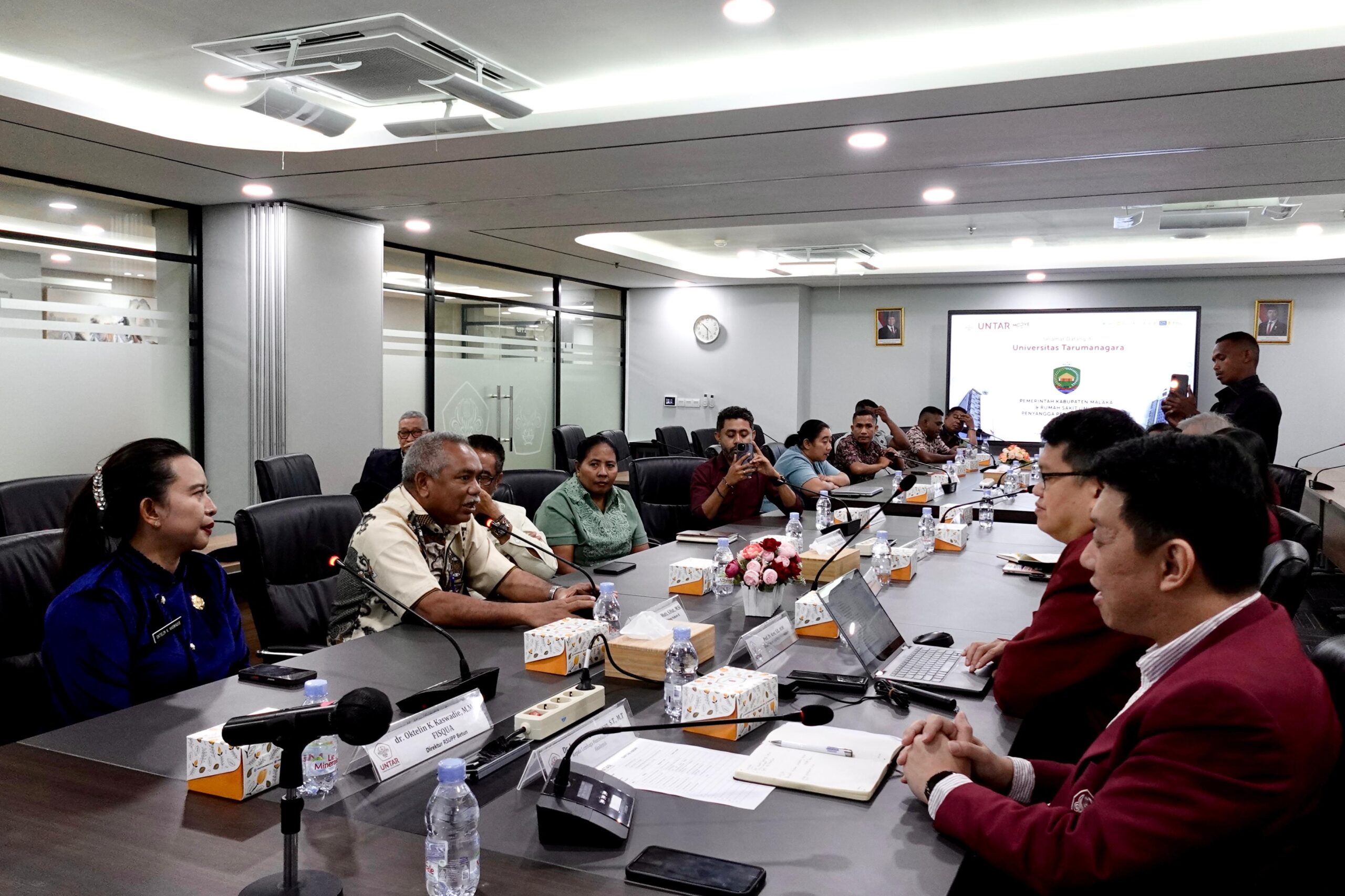
This issue was discussed during a visit by the Malaka Regency Government and Betun Border Supporting General Hospital (RSUPP Betun) in East Nusa Tenggara (NTT) to Universitas Tarumanagara (Untar) on Friday (06/11/2026). The meeting, held at Untar Campus I in Jakarta, explored potential collaboration in human resource development, particularly in hospital management.
Betun is the capital of Malaka Regency, located in Malaka Tengah District in the southern part of Timor Island. Directly bordering Timor-Leste, the regency faces challenges in expanding access to education and improving human resource quality, including in the healthcare sector.
Dr. Oktelin delivers her remarks // Doc: Untar Public Relations – CS
RSUPP Betun Director dr. Oktelin Kurniawati Kaswadie, M.M., FISQua, who is also an alumna of Untar’s Master’s Program in Management, considers improving the competencies of hospital management personnel one of the region’s fundamental needs.
“We cannot develop if our human resources do not develop,” she said.
According to Oktelin, the challenges go beyond the need for competent personnel. Limited access to further education is also an issue for healthcare workers and hospital management staff in border regions.
Therefore, opportunities to pursue further education through more flexible programs could help hospital personnel improve their skills without neglecting their work responsibilities.
In response to these needs, Head of Untar’s Institute for Academic Learning and Innovation Dr. Ir. Steven Darmawan, S.T., M.T., expressed Untar’s openness to exploring collaboration in education and human resource competency development.
Steven introduced several study programs that could support the needs of hospital management personnel. One opportunity discussed was Recognition of Prior Learning (RPL), a scheme that recognizes learning outcomes gained through formal education and work experience, allowing individuals to continue their formal education.
In addition to RPL, online learning opportunities were also discussed. For healthcare workers in areas with limited access to education, flexible learning is expected to provide greater opportunities to improve their competencies.
A similar hope was expressed by Malaka Regent’s Expert Staff for Legal and Government Affairs Ferdinand Un Muti, S.Hut., M.Si. He hopes that the discussions with Untar will open opportunities for human resource development in Malaka Regency, not only in healthcare but also in other sectors based on local needs.
The meeting also explored the possibility of providing assistance and developing educational programs tailored to the needs of the local government and hospital management.
Although still at the exploratory stage, the meeting opens opportunities for higher education institutions to address educational needs beyond the campus, including in border regions where access remains limited.
For RSUPP Betun, improving the competencies of hospital management personnel is an important part of efforts to provide better healthcare services for the people of Malaka. (CS/YS)